Wan Fambul/One Family Artist Profile – Sierra Leone’s Refugee All Stars

This profile of Sierra Leone’s Refugee All Stars is the eleventh entry in our new Artist Profile series, intended to introduce each contributing musician featured on the Wan Fambul/One Family benefit album. This compilation is available for a donation, with all proceeds going to the groundbreaking grassroots peacebuilding efforts of Fambul Tok in Sierra Leone.  Take a look at last week’s post on Mashrou’ Leila, and be sure to keep an eye out for our next profile, Dengue Fever!

Sierra Leone’s Refugee All Stars

As they languished in a squalid refugee camp in Guinea during the brutal civil war in Sierra Leone of the 1990s, the members of Sierra Leone’s Refugee All Stars, could not have imagined what the future would hold for them. In just five whirlwind years, the group has been the subject of an acclaimed documentary film, toured the world to support a critically revered album, appeared on the Oprah Winfrey Show, had their music featured in a major Leonardo DiCaprio film, and shared the stage and studio with Aerosmith, Keith Richards and other international stars. SLRAS have risen like a phoenix out of the ashes of war and have captivated fans across the globe with their uplifting songs and pure energy live shows. The band is a tangible example of the redeeming power of music and the ability of the human spirit to persevere through unimaginable hardship and emerge with optimism intact.

In the mid 1990s, band-leader Reuben Koroma and his wife Grace found themselves in the Kalia refugee camp near the border with Sierra Leone, and joined up with Francis John Langba (aka Franco), another musician in the camp, to entertain their fellow refugees. Even the refugee camps were not safe havens, however, as they were attacked by the Guinean military and civilian militias who believed the camps were being used as staging ground for cross border attacks by the Sierra Leonean rebels. Eventually, Reuben, Grace and Franco ended up in the more stable Sembakounya Refugee Camp, and there they put the call out for musicians to audition to form a band. After a Canadian relief agency donated two beat up electric guitars, a single microphone and a meager sound system, Sierra Leone’s Refugee All Stars were born.  The next three years saw the fledgling band being relocated from camp to camp, bringing much needed joy to fellow refugees with their heartfelt performances (The award winning eponymous documentary film chronicles this period).

The war in Sierra Leone came to an end in 2001, and over time the All Stars returned to Freetown, where they met other returning musicians who eventually joined the band’s rotating membership. It was there in the tin-roofed shacks of Freetown’s ghettos that SLRAS recorded tracks that ended up, along with unplugged recordings made in the refugee camps, being the basis for their debut album, Living Like a Refugee, which was released on Anti-Records in 2006.

Despite their success, back home in Sierra Leone it was becoming clear that even though the war was over, there were still difficult challenges to overcome the world’s third poorest country – this has only strengthened the resolve SLRAS to do what they can to turn their country around. Their weapon in this struggle is music, and their message, while offering critique and condemnation of wrongdoing, remains positive and hopeful. Optimism in the face of obstacles, and the eternal hope for a better future motivates their lives and music.

“It’s been a long struggle out of the war, out of miserable conditions,” notes Koroma, “So now we are trying to develop ourselves as a band and be based in our country. We are really moving towards finding ways of elevating ourselves somehow. But we do not just think about ourselves alone, we try to bring out sensitive issues that are affecting the world. It is all of our responsibility that the masses are suffering. We bring our positive messages into the world so we can expect a positive change in the world. And, most importantly, bring about peace.”

Their sophomore album “Rise & Shine” displays how much SLRAS have grown since their early days jamming around campfires in isolated refugee camps. The title of the album reflects the band’s desire to remain positive in the face of struggle, always greeting a new day with a spirit of excitement over what the future holds.  Their third album, Radio Salone, will be released in spring of 2012.

To learn more about SLRAS, visit their webpage.

Click here to learn more, sample or download Wan Fambul/One Family .

Bio compiled by Marshall Henry of Modiba Productions.

Masongbo Peace Mothers on Cassava Production

Immediately after their bonfire and reconciliation ceremonies in Madina village, Masongbo section, Makari Gbanti chiefdom, Bombali district last year, Bombali district staff, like their colleagues in other districts, encouraged community members to work as one family. The idea of peace mothers in Masongbo section was enthusiastically embraced for the fact that women have not been working as a unit in that part of the country.

According to community members, many non-governmental organizations have worked in the section but have failed to bring together all 8 villages to work as one family for the development of the section.

Cassava farm in Worreh Moria, Makari Gbanti chiefdom, Bombali district

Speaking to section chief Pa Alimamy Sorie Kamara, we learned that it has been very difficult for the community to work as one. One of the main reasons, he stresses, is that there is no women’s organization in the region, with the exception of Fambul Tok Peace Mothers. “That was why I personal talked to my colleagues to offer 8 acres of land to Peace Mothers  to plant cassava because this is a new initiative in this chiefdom, “Pa Kamara says.

In a very relaxed mood in Masongbo town, Chairlady of Peace Mothers, Madam Adama Kalokoh, alias Dam Dam, gave a brief background of the cassava project in Worreh Moria. She explained that the cultivation of the 8 acre cassava project started in December 2011, and went on to state that immediately after hosting other Peace Mothers from Kono, Kailahun, Moyamba and Koinadugu districts in an exchange visit in Makeni, they were shocked to learn the progress made by their colleagues as they organised themselves without external support to embark on various activities, and therefore after sharing experiences, they decided to do their own independent cassava project.

She said that initially, it was very difficult to contribute towards food for work as they have no external support but aded that with determination and perseverance,they made headway to actualize and progress the project.

On the question of what plans they have in mind in terms of processing the cassava, she says that will be determined by all peace mothers. Presently, they are weeding the farm to get rid of pests and scare away rodents, and are determined to do more activities this year to challenge other districts.

Madam Kalokoh concluded by extending thanks and appreciation to traditional leaders for offering Peace Mothers land free of cost, while calling on other organizations to support them in their farming activities.

Wan Fambul/One Family Artist Profile – Mashrou’ Leila

This profile of Mashrou’ Leila is the tenth entry in our new Artist Profile series, intended to introduce each contributing musician featured on the Wan Fambul/One Family benefit album. This compilation is available for a donation, with all proceeds going to the groundbreaking grassroots peacebuilding efforts of Fambul Tok in Sierra Leone.  Take a look at Tuesday’s post on Bhi Bhiman, and be sure to keep an eye out for our next profile, Sierra Leone’s Refugee All Stars!

Mashrou’ Leila

Formed in 2008, Mashrou’ Leila (Arabic: مشروع ليلى‎ sometimes transliterated as “Mashrou3 Leila”, meaning “night project”) has quickly emerged as one of the most exciting, original and successful bands in Lebanon today – if not all of the Middle East.  The group began without any preconceived expectations when American University of Beirut students Haig Papazian (violin) and Omaya Malaeb (keyboards) posted an open invitation to musicians, looking to jam.  The group’s lineup was solidified with the addition of guitarists Firas Abou Fakher and Andre Chedid, bassist Ibrahim Badr, drummer Carl Gerges, and vocalist Hamed Sinno.  The overnight jam sessions (from which the group got its name) served as an outlet for the musicians to vent the stress of college and the unstable Lebanese political situation.

From these late-night jam sessions Mashrou’ Leila developed their unique brand of Middle Eastern rock that draws on the influences of traditional Lebanese and Armenian music, fused with Western rock music. The group’s 2009 self-titled debut album’s nine songs wittily discuss war, politics, security and political assassination, materialism, lost love, immigration and homosexuality.  Now a major fixture on the Middle Eastern festival touring circuit Mashrou’ Leila has given concerts in Egypt, The United Arab Emirates, Qatar and Jordan.  In the summer of 2011, Mashrou’ Leila released the 7al Romancy E.P., five songs of new material recorded in the abandoned concrete dome in the Tripoli world Fair.

Mashrou’ Leila has taken an active role in promoting causes through their live performances.  For example, in December 2010 to commemorate World Aids Day the band played at a sold-out benefit concert that raised over $20,000 for the HIV/AIDS fund at AUB-Medical Center Out Patient Department.

The band members were all born during the end of the brutal Lebanese Civil War and therefore it is hard for them to fully grasp how the civil war has affected Lebanon.  In regard to the current state of the country, the band explains: “While the civil war has had a tremendous impact on the economy, the damage is secondary when compared to the effect it has had on the average Lebanese citizen’s way of thinking. The civil war has left most of the Lebanese extremely wary of fellow citizens from other sects/political groups. On the other hand, the country remains notorious for it’s party scene, night life and tourist destinations, a somewhat hypocritical curiosity that serves as a testimony to the population’s yearn for life and happiness.”

Mashrou’ Leila sees their music as a first step in helping to unify the divisions caused by the war and the subsequent “decades of turmoil.”  They feel most of Lebanese society’s problems are due to their way of thinking and they hope that “simply bringing some of these issues up will force people to come to terms with the problem.” So far their message seems to be getting across.  The band proudly declared: “fans are identifying with the situations we describe, the images our lyrics create – and for the first time, they feel that there’s something within their culture that represents them, and their thoughts.” However, at the same time Mashrou’ Leila is confronted with conservative people that are “bothered by the honesty of our words – and would like to keep these issues not discussed.”  This “silent treatment” is similar to how they feel the Lebanese media refuses to address certain issues. “We swear in some songs, we sing about intimate sexual details, we talk about unconventional love – people need to come to terms with the real world – it’s not perfect.”

When asked what they thought was important for audiences outside Lebanon to understand they explained: “While people living in North America might be familiar with Lebanon’s political problems, it is important to keep in mind the Lebanese people’s diversity in terms of both lifestyle and way of thinking.”

To learn more about Mashrou’ Leila, visit their webpage.

Click here to learn more, sample or download Wan Fambul/One Family .

Bio compiled by Marshall Henry of Modiba Productions.

Wan Fambul/One Family Artist Profile – Bhi Bhiman

This profile of Bhi Bhiman is the ninth entry in our new Artist Profile series, intended to introduce each contributing musician featured on the Wan Fambul/One Family benefit album. This compilation is available for a donation, with all proceeds going to the groundbreaking grassroots peacebuilding efforts of Fambul Tok in Sierra Leone.  Take a look at last week’s post on Vieux Farka Touré, and be sure to keep an eye out for our next profile, Mashrou Leila !


Bhi Bhiman

Bhi Bhiman is an American singer/songwriter of Sri Lankan Tamil descent, born and raised in St. Louis, Missouri.  He writes songs soaked in the grand folk tradition, penning both passionate protest songs and tender love songs with style. His skill is in stitching his music with a subtle sort of political consciousness that doesn’t feel like homework to the listener.  His love songs are always sweet with a touch of sad, while his protest songs range from laugh-out-loud funny to quiet-a-chatty-bar chilling.  But so what?  There are tens of thousands of singer-songwriters in America attempting just that – but they can’t sing like Bhi Bhiman. He belts out his songs with a voice that’s more sixties soul and Nina Simone than the semi-precious singing often associated with modern folk.

Bhiman addresses multiple social issues in his music ranging from race, class inequality, politics, love, greed, and heartbreak.  His songs endeavor to open listeners’ minds to subjects that they may not otherwise be accustomed.  Bhi explains: “I tend to talk about a darker side of life – people’s trials and tribulations.  Sometimes my characters ultimately triumph; sometimes they live to see their downfall.  I try to walk and talk as the characters in my songs, and I try to put the listener into their shoes as best as possible with lines that are universal and relatable.  I feel it’s my job to make you see the characters’ side of the story, whether they are right or wrong.  I ultimately want people to look at the world from all angles and viewpoints.  The good and the evil and the grey in between.”

In addition to his brilliant songwriting, Bhi is an advocate for his parents’ homeland of Sri Lanka, which he calls “one of the most beautiful destinations on earth.” When reflecting on the violent and complicated history between the Sinhalese and Tamil people Bhi points out: “While the majority of [Sri Lankans] are innately peaceful and tolerant, it’s the intolerant that end up being the most outspoken and violent.”  Bhi is “not a proponent of the Tamil Tigers and the violent tactics they used,” but he feels that “there was (and is) no one else speaking as the voice of the Tamil people in Sri Lanka.”  His main concern, as an outsider, is the transparency and accountability of the Sri Lankan government.  He is concerned about the “alleged war crimes that the U.N. is failing to investigate and the large numbers of Tamils still kept in internment camps, who are unable to communicate with loved ones on the outside.”  As well as the fact that: “the government does not seem to be in a hurry to relocate them to their homeland – mainly because they do not see it as their homeland.  Much of their centuries-old land in the north and east has already been ceded by the government to Sinhala citizens.  I do believe that Sri Lanka will be a safer, more secure country in the future, but whether the ends justify the means in this case is debatable.”

To learn more about Bhi, visit his webpage.

Click here to learn more, sample or download Wan Fambul/One Family .

Bio compiled by Marshall Henry of Modiba Productions.

Wan Fambul/One Family Artist Profile – Vieux Farka Touré

This profile of Vieux Farka Touré is the eighth entry in our new Artist Profile series, intended to introduce each contributing musician featured on the Wan Fambul/One Family benefit album. This compilation is available for a donation, with all proceeds going to the groundbreaking grassroots peacebuilding efforts of Fambul Tok in Sierra Leone.  Take a look at Tuesday’s post on Idan Raichel, and be sure to keep an eye out for our next post, Bhi Bhiman!

Vieux Farka Touré

Since releasing his debut album in 2006, Malian guitarist/singer Vieux Farka Toure has been one of the fastest rising stars in African music.  The son of the legendary, Ali Farka Toure, Vieux has built upon the sound of his father’s “Saharan Blues.”  Despite multiple world tours – including a performance before a televised audience of over one billion at the 2010 World Cup in South Africa – Vieux has not forgotten his roots and has been a constant champion of African humanitarian causes.

Malaria prevention has always been one of the most pressing issues to Vieux and he launched his own “Fight Malaria Campaign.”  The campaign’s launch coincided with the release of his debut album and his first United States tour, which was billed as the “Fight Malaria Tour.”  The “Fight Malaria Campaign” donates money (through album and t-shirt sales) toward the import and distribution of insecticide treated mosquito nets to pregnant women and to children in the Niafunke region of Mali where Vieux was born.

In 2010, Vieux contributed music to the 25th anniversary re-release of “We Are The World: United Support of Artists for Africa (USA for Africa)” album that also included music by Michael Franti & Spearhead, Aurelio Martinez with Youssou N’Dour, Angelique Kidjo, Lila Downs and Sierra Leone’s Refugee All Stars.

For most of Vieux’s life, Mali has been a peaceful country, but resistance movements (people fighting for freedom from the government) frequently emerge in the North of Mali where his family lives. Vieux explains: “I think that this makes people in Mali aware that peace is precious and that we must work to protect it.  It is rare and beautiful and not something we should take for granted.  We are very lucky in Mali to have peace at this moment and we must always be vigilant to defend it.”

Vieux believes music can be a powerful tool for helping to heal the fractions in society caused by political conflicts: “Since music is a universal language, it can be the first thing that bridges gaps between cultures that may not agree about other things.  For example, the music of Tinariwen, and other groups in the North of Mali, has made a strong impact in the relationship between the Tuaregs and the other ethnic groups.”

Vieux’s third studio album, The Secret, produced by Soulive’s Eric Krasno was released in May 2011.  The critically acclaimed album features Dave Matthews, John Scofield, Derek Trucks, and Vieux’s final collaboration with his late father.

To learn more about Vieux, visit his webpage.

Click here to learn more, sample or download Wan Fambul/One Family .

Bio compiled by Marshall Henry of Modiba Productions.
Massacred Villagers Remembered

Special prayers were held last week on Friday, April 13, 2012 for those that were brutally killed in Woroma village,Malema chiefdom,Kailahun district,during the rebel war in the country.

Prior to offering prayers,the town chief of Woroma,Saidu Kallon and the entire community members  agreed to hold  a special memorial  mass to  remember 15 elderly people that were shot to death at gun point by one of the sons of that community,who joined the then Revolutionary United Front forces of Sierra Leone.

Special prayers were held last week on Friday, April 13, 2012, for those who were brutally killed in Woroma village, Malema chiefdom, Kailahun district, during the rebel war in the country.

Prior to offering prayers, the town chief of Woroma, Saidu Kallon and the entire community agreed to hold a special memorial mass to remember 15 elderly people that were shot to death at gun point by one of the sons of that community, who joined the then Revolutionary United Front forces of Sierra Leone.

Chief Kallon had earlier testified in Foobu during a Fambul Tok reconciliation ceremony, how Med Kay captured 15 innocent villagers in Woroma among them the town chief and other elderly people and shot them at close range one after the other.

Other villagers also accused Med Kay and his troops of causing mayhem in Malema chiefdom and its environs. The accused had earlier claimed responsibility for his actions and asked for forgiveness.

After the sectional reconciliation ceremonies in Foobu, Chief Kallon and his people also agreed to hold a special memorial service to offer prayers for the dead.

During the bonfire in Woroma, Chief Kallon said they have forgiven Med Kay in the interest of peace and reconciliation. He said they wanted to pay respect to the dead so that their faithful souls would rest in peace.

The community members unanimously resolved to embark on farming activities so that they could continue the healing and reconciliation process together.

Wan Fambul/One Family Benefit Album Artist Profile – Idan Raichel

This profile of Idan Raichel is the seventh entry in our new Artist Profile series, intended to introduce each contributing musician featured on the Wan Fambul/One Family benefit album. This compilation is available for a donation, with all proceeds going to the groundbreaking grassroots peacebuilding efforts of Fambul Tok in Sierra Leone.  Take a look at last Thursday’s post on Vusi Mahlasela, and be sure to keep an eye out for our next post, Vieux Farka Touré!

Idan Raichel

Idan Raichel is broadly recognized as one of the most innovative and popular musicians in Israel today.  He was recently voted Israel’s Musician of the Decade in polls conducted by Israeli news media.  In 2002, his group, The Idan Raichel Project burst onto Israel’s music scene, changing the face of Israeli popular music and offering a message of love and tolerance that resonated strongly in a region of the world where headlines are too often dominated by conflict.  With an enchanting blend of African, Latin American, Caribbean and Middle Eastern sounds coupled with sophisticated production techniques and a spectacular live show, the Idan Raichel Project has become one of the most unexpected success stories in Israeli music history.

The Project has collaborated with over one hundred artists ranging from Colombian singer Marta Gómez, silken-voiced Somi of Rwandan and Ugandan descent and Cape Verdean diva Mayra Andrade.   Idan has toured Europe, Asia, the United States, Australia, South Africa and Latin America.  In 2006, his concert in Addis Abba, Ethiopia marked the first time an Israeli artist performed in Ethiopia and the first time two of The Projects lead singers were able to return to the land of their birth. “Black Over White,” a documentary film by Tomer Heymann, captures the events leading up to the concert and highlights the racism in Israel faced by some African immigrants.  Idan explains: “It makes great headlines to talk about racism in Israel or the clash between black and white…But you really need to go a lot deeper than that to understand the problems. Racism is a completely human reaction when you lack knowledge. Those who teach racism are bad people, but not those who don’t have sufficient education to understand what they are hearing.”

Idan’s highly collaborative music is inspired by the belief that lasting peace in the Middle East “will not be reached by signing a peace treaty between our great leaders and their great leaders.  Ultimately, it will be achieved through knowing people from other countries as neighbors – because a neighbor is not your enemy.”  To achieve this sense of community, Idan explains, “Children in Israel should learn about Palestinian poetry and Syrian music in school.”

Idan points out that the political environment in the Middle East changes extremely quickly, but when asked about what the most important issue Israelis are dealing with in the summer of 2011, Idan states: “we need to look across borders and appreciate the brave people that are willing to create democracies in countries such as Syria and Egypt – and to support them in any way possible.  At the end of the day all people just want to live in peace, dignity and prosperity.”

He feels music can be a successful tool in helping to unify divisions, citing the West-Eastern Divan Orchestra lead by conductor Daniel Barenboim as an example.  In December 2010, Idan performed at the Nobel Peace Prize concert in Oslo, Norway.

“What most people know about Israel is from news” and Idan invites people “to come to Israel and see it with their own eyes.”

Later this year he will release an album with popular singer India.Arie called Open Door, and he is at work on an album with Malian guitarist Vieux Farka Touré.

To learn more about Vusi Mahlasela, visit his webpage.

Click here to learn more, sample or download Wan Fambul/One Family .

Bio compiled by Marshall Henry of Modiba Productions.

Wan Fambul/One Family Benefit Album Artist Profile – Vusi Mahlasela

This profile of Vusi Mahlasela is the sixth entry in our new Artist Profile series, intended to introduce each contributing musician featured on the Wan Fambul/One Family benefit album. This compilation is available for a donation, with all proceeds going to the groundbreaking grassroots peacebuilding efforts of Fambul Tok in Sierra Leone.  Take a look at Tuesday’s post about Abjeez, and be sure to keep an eye out for our next post, Idan Raichel!

Vusi Mahlasela

Vusi Mahlasela, simply known as ‘The Voice’ in his home-country of South Africa, is celebrated for his distinct, powerful voice and his poetic, optimistic lyrics. His songs of hope connect Apartheid-scarred South Africa with its promise for a better future. Raised in the Mamelodi Township, where he still resides, Vusi became a singer-songwriter and poet-activist at an early age teaching himself how to play guitar and later joining the Congress of South African Writers. After his popular debut on BMG Africa, When You Come Back,Vusi was asked to perform at Mandela’s inauguration in 1994 and continues to spread Mandela’s message as an official ambassador to Mandela’s HIV/AIDS initiative, 46664.

After world-wide touring and international acclaim, Americans first caught a glimpse of Vusi in the lauded documentary film Amandla! A Revolution in Four-Part Harmony, and the accompanying soundtrack. After the release of the film, long-time admirer and fellow South African, Dave Matthews, signed Vusi to his own ATO Records label and released The Voice (2003)¸ a collection of the best songs from Vusi’s catalog. In 2007, ATO released his latest album, Guiding Star, his first full-length release in the States. ATO Records will release the highly anticipated follow-up record to Guiding Star on January 18, 2011. The new album, Say Africa, produced by Taj Mahal and recorded at Dave Matthews’ studio in Charlottesville, VA, captures Vusi’s hope for the future of Africa: ‘Let all those who share in Mandela’s greatest wish—to one day see an Africa that is at peace with herself—SAYAFRICA.’

After recording the album in the States this spring, Vusi returned to his home in South Africa and was honored to help ring in the World Cup at FIFA’s Kick Off Concert at Orlando Stadium. The concert was broadcast internationally to an estimated one billion viewers. Following his performance, Vusi proudly introduced fellow South African, Archbishop Desmond Tutu on stage. Vusi’s anthemic song ‘When You Come Back’ was ITV’s official theme song for the World Cup in the UK. Other recent highlights include performing at Mandela Day to honor Mandela’s birthday, touring with Bela Fleck behind the release of his Grammy-winning album ‘Throw Down Your Heart,’ which features a live track from Vusi and Bela, two appearances at the TED conference and performing with Paul Simon.

In the midst of a busy international touring schedule, Vusi remains dedicated to his social activism and partnerships with non-profits, including his own Vusi Mahlasela Music Development Foundation, committed to the promotion of and preservation of African music. Other organizations that Vusi actively supports are OXFAM, The Acumen Fund, The African Leadership Academy and the ONE campaign.

Over a musically and socially consequential career, South African singer-songwriter and poet-activist Vusi Mahlasela has successfully followed his muse and continued to give back to his country. As he puts it, he knows that ‘musicians have to be like watchdogs, just by seeing and speaking out, directly to the youth as well, because we need some kind of Cultural Revolution to remove ignorance.”

When asked why the music from the struggle against apartheid still has so much appeal outside of South Africa, Vusi explains: “I think it was [because] our struggle had so much passion. We are all part of the same human family, and when you see your family suffering, your heart responds. Many people in the world found their hearts opening when they heard these songs.”

Another theme that permeates his music is the importance of forgiveness: “I learned from [Nelson] Mandela and [Desmond] Tutu that forgiveness is within you…If you don’t forgive, you are the one who suffers the most.”

To learn more about Vusi Mahlasela, visit his webpage.

Click here to learn more, sample or download Wan Fambul/One Family .

Bio compiled by Marshall Henry of Modiba Productions.
Wan Fambul/One Family Benefit Album Artist Profile – Abjeez

This profile of Abjeez is the fifth entry in our new Artist Profile series, intended to introduce each contributing musician featured on the Wan Fambul/One Family benefit album. This compilation is available for a donation, with all proceeds going to the groundbreaking grassroots peacebuilding efforts of Fambul Tok in Sierra Leone.  Take a look at last Thursday’s profile of Eccodek, and be sure to keep an eye out for our next post, Vusi Mahlasela!

Abjeez

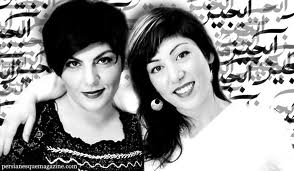
Abjee (aab.gee) is Persian slang for “sister” and that’s just what they are – sisters Safoura and Melody Safavi.  Backed by a colorful crew of musicians, the two abjees present their own original brand of Persian world pop.  Their lyrics, often humorous and occasionally rebellious, are written in Farsi, English, Spanish and Swedish.  The expressive groove of the music and the abjees’ dramatic delivery break down all language barriers to create a new synthesis of cultures.

Born in Iran shortly after the revolution, Safoura and Melody moved to Sweden when they were 13 and 12 years old, respectively.  While it is illegal to buy the band’s CDs in Iran, much of the feedback they receive comes in the form of emails from Iranian fans explaining “how their favorite Abjeez songs have affected them personally and [in] their lives.”  These dedicated fans sometimes ask for the notes and chords to songs and send their own music – asking Abjeez to listen to it and give them feedback. “They constantly encourage us to continue our work and they are our greatest inspiration,” the girls explain, and the band’s dream is to someday perform a concert back in Iran for these loyal fans.

Abjeez also wrote several songs in support of the freedom-seeking people of Iran during the aftermath of the 2009 Iranian presidential election, explaining “Those songs raised a lot of attention among Iranians worldwide. One of them was frequently played in different Iranian rallies in support of the Iranian Green Movement and we [continue] receiving positive response for it, which makes us realize how important our role can be, as advocates of the peace-seeking people, especially the women and youth. We try to shed light on their issues and help spread their call for help wherever we perform.”

Abjeez believes that music is an excellent tool for unifying people: “Most conflicts are based on a lack of understanding and communication. Music creates unanimity. Historically we can see that music has always played an important role in all great wars and major conflicts. In every single country in the world when people go out on the streets to demonstrate for or against something, they chant. There are revolutionary songs writers who have not only been the voice of their own country but the have turned to the voice of justice and freedom in the entire world (like for example the works of Victor Jara). Governments and different political groups around the world use artists and their music to incite people’s feelings and emotions in their political campaigns.”

According to Abjeez: “Music is a universal language that belongs to everybody. No matter what religious or political view we might have, music resonates in the very same way in our bodies. We often focus on our differences and therefore conflicts arise. When we instead focus on our similarities we don’t need to be afraid, or to defend our ideas and ourselves. Tolerance arises and we allow ourselves to learn and grow.  We try to use the power of music in such way by creating a loving and positive ambiance for our audience to shed light on cultural and social problems in an often humorous and direct way so that we [are] all in a relaxed state of mind [and] can see, recognize, heal and find the strength to change for the better.”

To learn more about Abjeez, visit their webpage.

Click here to learn more, sample or download Wan Fambul/One Family .

Bio compiled by Marshall Henry of Modiba Productions.
Wan Fambul/One Family Benefit Album Artist Profile – Eccodek

This profile of Eccodek is the fourth entry in our new Artist Profile series, intended to introduce each contributing musician featured on the Wan Fambul/One Family benefit album. This compilation is available for a donation, with all proceeds going to the groundbreaking grassroots peacebuilding efforts of Fambul Tok in Sierra Leone.  Take a look at Tuesday’s profile of King Britt, and be sure to keep an eye out for our next post, Abjeez!

Eccodek’s remix of Bajah + The Dry Eye Crew’s “Wi Na Wan Fambul” is available as an exclusive download here.

Eccodek

Eccodek is Canadian producer, remixer and multi-instrumentalist, Andrew McPherson. But more than that, it is the tapestry of sound created when a producer working with inspired singers and gifted multi-instrumentalists from the four corners of the globe find a common love for dub, funk, jazz and cinematic electronics. Eccodek is the sound of cultures mingling, borders dissolving.  It is the sound of the dub chamber, the goatskin drum and decaying vintage synths.  It is the sound of Mali, Turkey, Fiji, Nigeria, India, Canada and beyond.

Eccodek’s albums More Africa In Us (2003), Voices Have Eyes (2005), Shivaboom (2008) and their latest Remixtasy (2011) are built on a foundation of global beats, soaring melodies and textured electronica that has firmly established the project as a leader on the global fusion stage.

Eccodek uses his music “in a kind of subversive way, but not in anyway manipulative or with a secret agenda.  Music IS a universal language, so I try to send a message of cultural inclusion, tolerance, multiculturalism and open mindedness by collaborating, fusing cultural traditions and opening ourselves to new musical vocabularies.  By doing so, [the music] sends a message of peace, harmony and borderlessness. My music isn’t about preaching a belief system, other than the one that can be found in the landscape of my recordings and remixes.  I welcome any and all collaborative instincts, if they serve the song, and hopefully others will pick up on that good intention.  When they feel that, I’d like to believe that social change happens each and every time [Eccodek] records are played, without people even realizing they’re contributing to that dialogue.”

For Eccodek, “the power of song is a potent thing.”  He explains: “I always say to people that when the grid shuts down and the basic human resources become scarce in times of natural disaster, war or any upheaval, we turn to song to raise our spirits and give us guidance.  We saw this in Nazi Germany, when they attempted to wipe out the cultural traditions and voices of the people, that the people find a way to express themselves that can never be suppressed.”

By representing and celebrating so many unrelated cultural traditions in his music, he feels the message sent out is a very clear one of ‘we are one’. “There is no hierarchy of style in my recordings, but more a fearlessness to weave in whatever sound or musical tradition that feels right.”

To learn more about Eccodek, visit his webpage.

Click here to learn more, sample or download Wan Fambul/One Family.

Bio compiled by Marshall Henry of Modiba Productions.