Originally written in 2011-12 by Fambul Tok volunteer Sara Waldheim
Peace Mothers Journey: Village One, Koinadugu District
It’s been almost three months since I arrived in Sierra Leone to serve as a volunteer with Fambul Tok. My road to Sierra Leone was influenced by several factors — a combination of travel, conversation and inner dialogue and searching. I first visited Freetown in March 2011 as part of an educational study tour of West Africa, during which U.S. Ambassador Michael Owen spoke to us about the struggle to help mend post-war Sierra Leone and his plans to help the country move forward. That fall, I attended a screening of the documentary film Fambul Tok in my hometown of Bend, Oregon and had the chance to speak with the film’s Director, Sara Terry, about our common love for Africa. Finally, despite having become involved with projects and communities in Tanzania, Egypt and Ethiopia, I felt a need to visit Africa to serve in another manner, and was unable to shake the urge to make Sierra Leone my ultimate destination.
I contacted Sara, she put me in touch with Fambul Tok staff, and after a few weeks, I was accepted as a volunteer and the dates were set for my arrival.
As the time of my volunteer period draws to an end, I am sad to leave. It has been the most uplifting and joyous experience of all of my journeys throughout the world. I will be back!
Before the recent elections in November, I was staying in Kono when Ambassador Owen and his wife, Annerieke, attended a presentation by some of the Fambul Tok Peace Mothers. Later that evening, we had a chance to chat and I was asked to tell my story of how I became a volunteer with Fambul Tok. During this conversation with Mrs. Owen, she expressed a keen desire to visit the villages more in depth, and I offered the opportunity for us to take her. The idea of visiting some of the villages where the Peace Mothers have the most impressive success stories after going through the Fambul Tok reconciliation and power of forgiveness bonfires was born.
Micheala Ashwood, Head of Peace Mothers at Fambul Tok, and I put our heads together and decided this would be the perfect opportunity to document the success stories of the empowerment of the women calling themselves Peace Mothers following the war. I came up with the idea to create a book of pictures and stories to be used as a fundraiser, as well as a Peace Mothers documentation piece, and Mrs. Owen agreed to be the photographer for the book. A local TV personality, Isa Blyden of Sierra Leone Broadcasting Corporation, heard about our journey through the Embassy and asked to send an additional photographer with us to film for a short documentary to be used on her TV show.
Because of the magnitude of their success, we chose to highlight Koinadugu and Bombali Districts. Micheala, Mrs. Owen, George Lewis (the photographer from SLBC) and I set out on this journey, made possible by the U.S. Embassy and other funders.
Our journey lasted from December 16 through December 21, 2012, and we were scheduled to visit a total of ten villages, five in each district beginning in Koinadugu. This series of blogs is about the visits to seven of those villages.
Manna Village, Manna II Section, Dembelia Sinkunia Chiefdom, Koinadugu District
The villagers did not know we are visiting; this is the way Fambul Tok operates. Once the villages have held their initial reconciliation bonfire, the district staff is on the road everyday doing spot checks to make sure all is going well, occasionally intervening where necessary. To get a true sense of the village’s progress, they always arrive unannounced unless there is a need for a specific meeting, like the sensitization conducted before the elections.
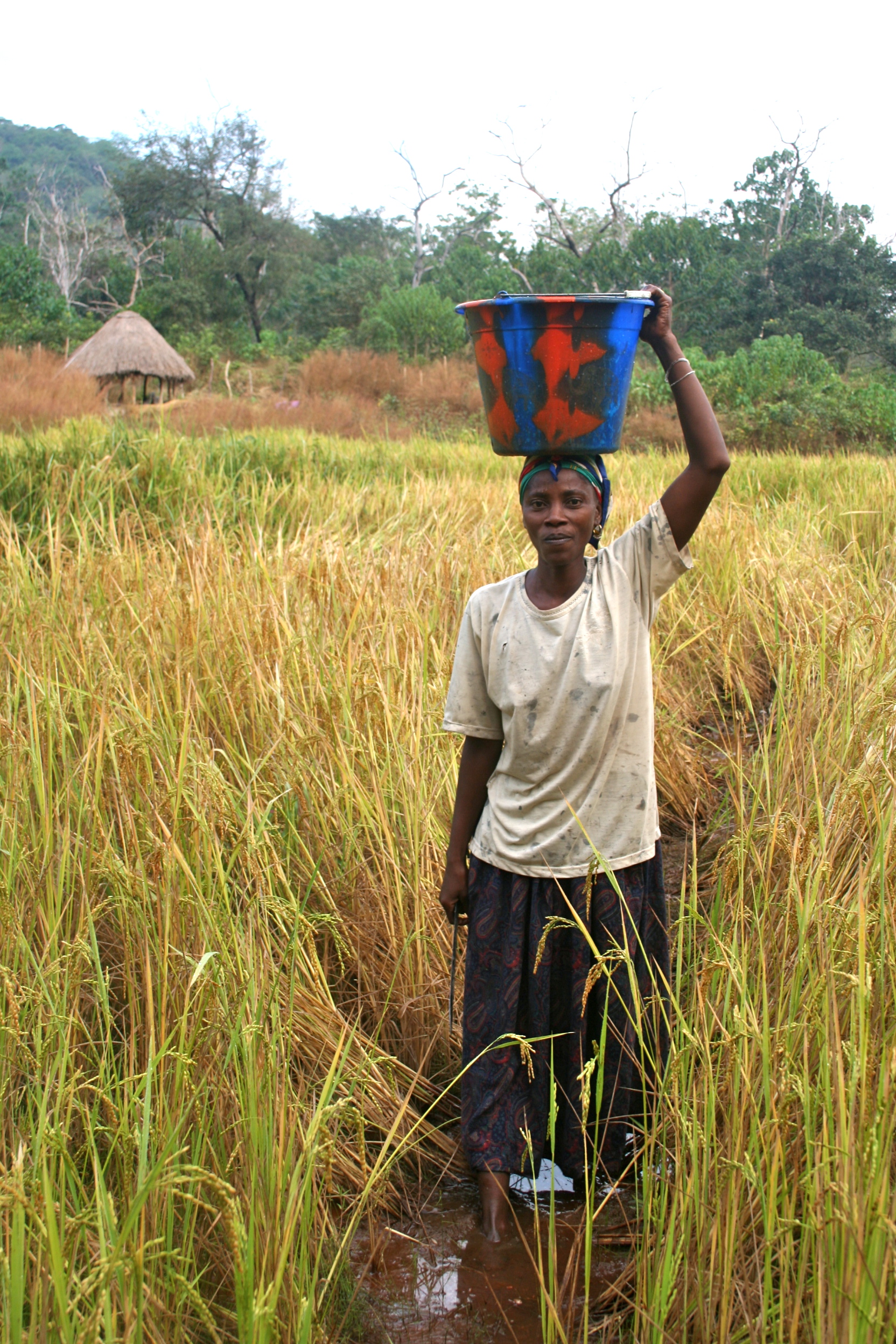
As we drove up the road toward the village, we saw many women walking towards us with tools over their shoulders and some with pots on top of their heads. We are in luck! It is farming day at the Peace Mothers cooperative farm. Most of the villages have up to three farms: Peace Mothers Farm, Community Peace Farm and Family farm, each with a detailed schedule.

Walking To The Rice Farm
We continued into the village to meet the Town Chief, let him know we are there, and to ask permission to film. We parked by the side of the road in front of the narrow grass covered path leading to the farm and made our way through the field, careful not to step in the path of the working women.
After much careful navigation of the path, we finally reached the spot where women and some men were busily clearing a section of ground located just up from the swamp rice field. The men do the heavy clearing with machetes and axes while the women use narrow hoe-like instruments to do the fine clearing. Once the ground is free of all plant life they will cover it with cow dung and let it dry forming a flat thrashing floor for the harvesting that will take place in two weeks.
The women who arrived first were already hard at work. Nursing mothers hoeing with their babies tied to their backs, singing as they worked. It is hard, labor intensive, back breaking work, but the joy, peace and unity of the activity was evident.

Peace Mothers Rice Farm
The rice field stretches as far as the eye can see in either direction and is colored with different hues of green and gold. The planting is always done in stages, so the harvest is manageable. The different colors of rice show the different stages of ripening, I was told. Light, bright green rice are the youngest sprouts that turn a darker green and then gold when ready to harvest. Some of the rice is allowed to get dark brown and that will be used for seed at the next planting. The usual yield is two crops a year.
Located across the field is a thatched roof hut used during harvest and general tending of the field for resting, cooking and eating. On the days they work the farm, they are there all day. Labor is divided with some of the women preparing the meal while the others work. The meal preparation duty is rotational.
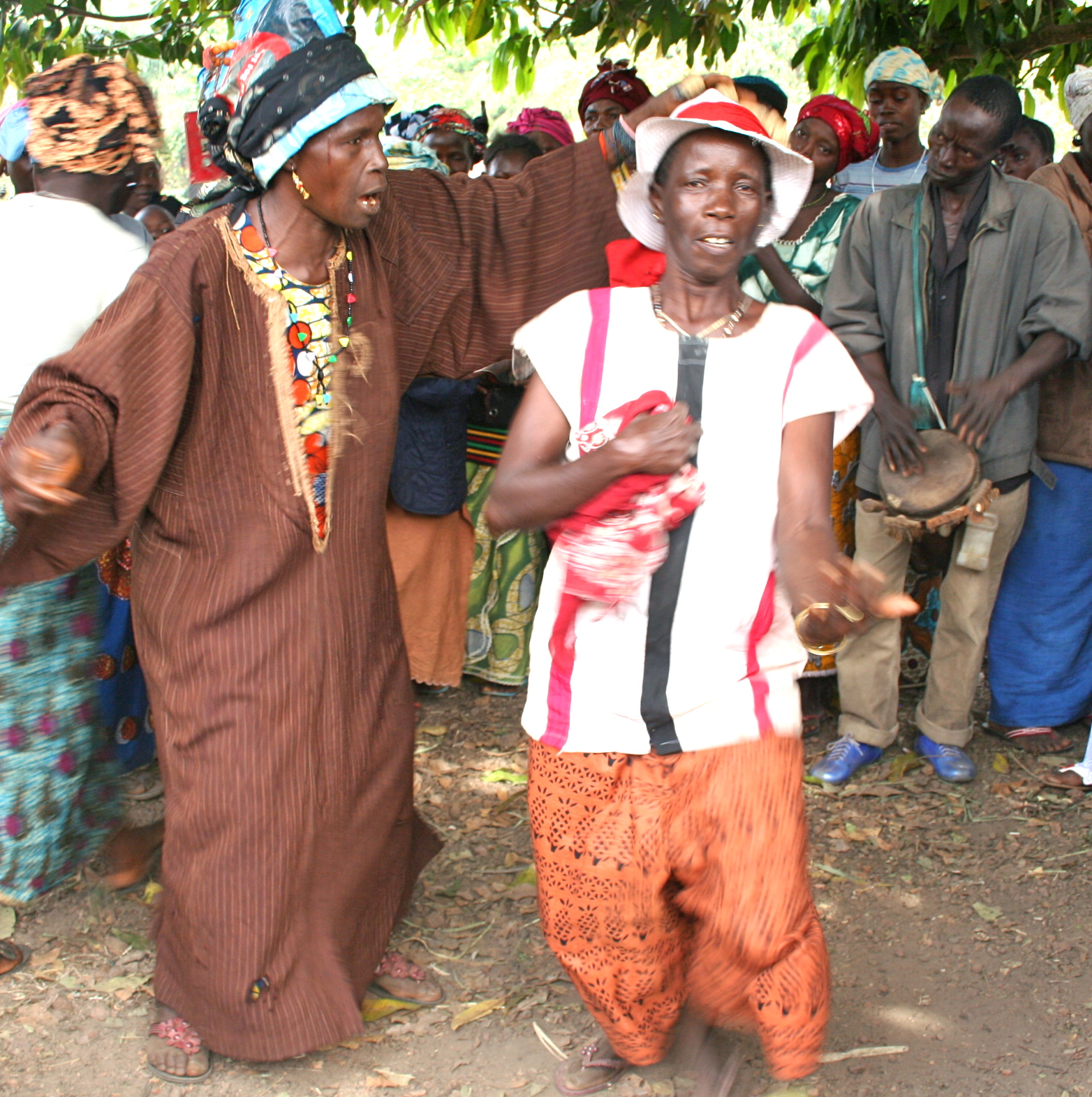
Having us there proved to be too tempting and soon the women were dancing and gathering around us with welcoming songs. One of the men and one of the women performed a very colorful and dramatic traditional ‘mating’ or courting ritual dance.

Courting Ritual Dance
When they returned to clearing, some of the women began preparing food. Once the cooking was done, the meal consumed and the dishes washed, everyone returned to the fields, once again.
This farm was started after Fambul Tok guided the community through the forgiveness and reconciliation process. The women all said that they would not be empowered as they are, nor be here together with this successful farm, if it hadn’t been for Fambul Tok. Most of the women use their proceeds to send their children to school.
When asked how the farm could be further improved, they expressed an interest in acquiring tarp to cover the thrashing floor in order to eliminate the small stones that always find their way into the rice. Additionally, they want to do cross-district fish trading as their next step for growth beyond the farm.
Peace Mothers Journey: Village Two, Koinadugu District
Sagarleh Village, Mawundia Section, Demblia Sinkunia Chiefdom.
Our destination for this leg of our trip is located a long way out into the bush, over very narrow and bumpy roads, and a short way up a mountain. Again they are not aware we are visiting, even though we are planning on spending the night. Such is the hospitality of the people of Salone (Sierra Leone).

The Village
To the district staff’s surprise, we learn they are having a reconciliation bonfire tonight. One of the villagers who left for Guinea during the war has returned to find two of his cows and ten of his goats taken by another villager. These animals are the total of the man’s wealth.
The killing of the thief by the wronged party sometimes punishes this type of offense, which (it looked to me) was about to happen. Fortunately, the local Peace Mothers intervened and called in the community Reconciliation Committee, who has been working with both of the men getting them to agree to reconcile at the bonfire tonight.
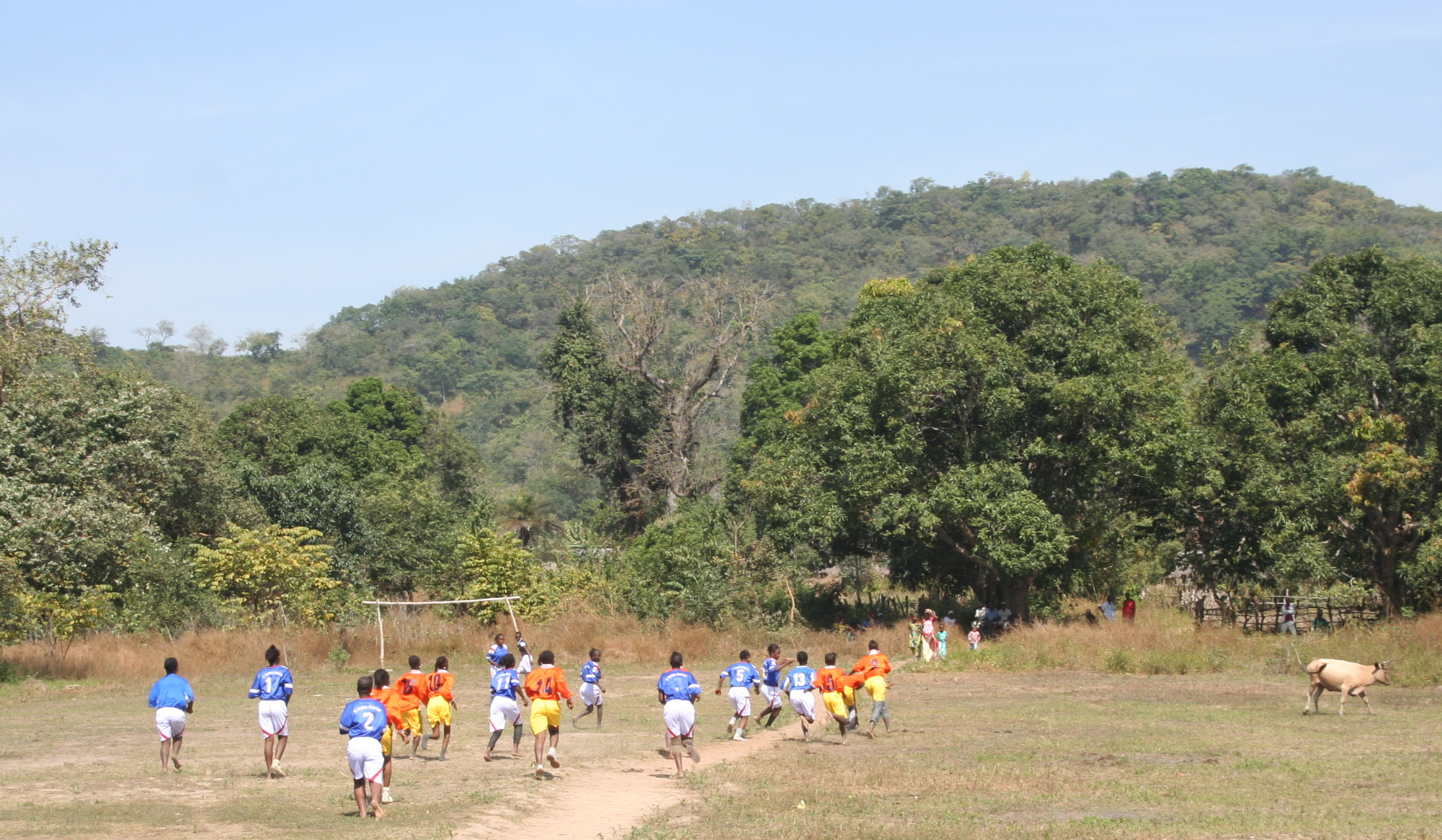
Before the reconciliation, though, there will be a football match between the young girls of the villages from the section and several from Freetown. It is symbolic of the reconciliation and will take place on the field at the school. The game ends in a tie and even though it is not supposed to be a competition, tying the score is the best ending.

Reconciliation Football Match
At one point, a long-horned cow (they are free to roam everywhere) wanders onto the field. The girls are not deterred and run right at it in pursuit of the ball. The cow beats a hasty retreat.
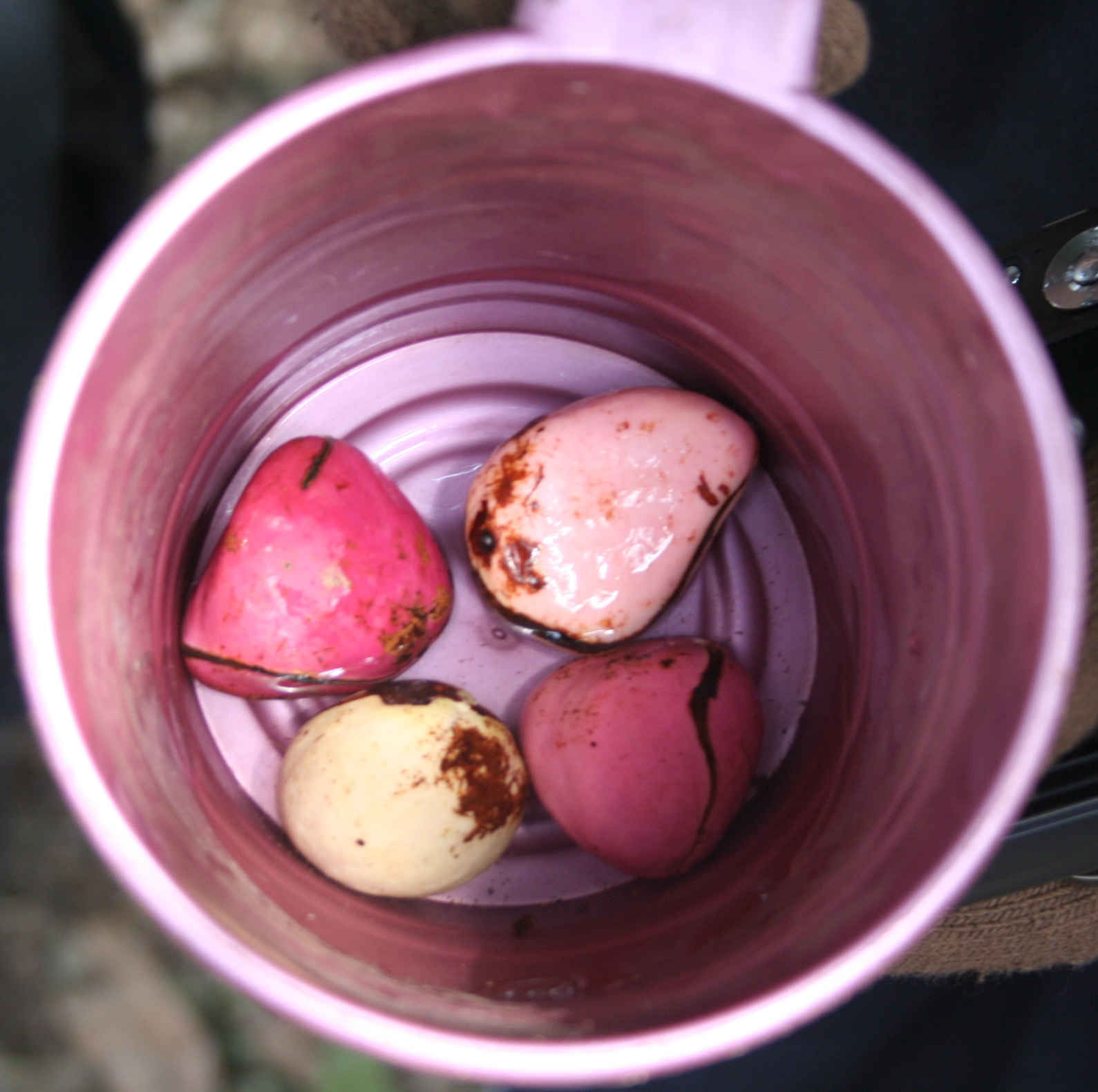
After the game, we are led to sit under the Peace Tree that can be found in every village. This tree is where anyone can go to work out even the smallest conflict. All are equal under this tree. First, the village elders bring a bowl to us. It contains kola nuts in some water and is a tradition here to welcome visitors. I am given the bowl first and told to take a nut, break it in half and take a bite out of one half. Then I am to present the other half to the Town Chief.

Kola Nuts
One of the men tells a story of the village right after the war. When the villagers began to return to the village, some of the men went to the river where before the war there was plenty of fish. When they got to the river there was only a small amount of fish. As time went on and the villagers struggled to get along with one another, the fish disappeared completely. After Fambul Tok arrived and conducted the village’s initial reconciliation bonfire, the village then held a ceremony honoring their ancestors. After those two ceremonies, the villagers settled into a routine of peace and unity, beginning to work together once again. One day, some of the men returned to the river and found the fish back in more numbers than before! In their minds, a miracle had occurred due to the reconciliation and forgiveness process.
Several of the women speak about the success of the rice and groundnut harvests from the Peace Mothers cooperative farms. They all give credit to Fambul Tok and the power of forgiveness. They say that they love the fact that they have empowered themselves and are now able to send their children to school. Disputes are now settled under the Peace Tree – eliminating the need for the involvement of the Chief, the police and the courts and the cost of filing a complaint with those entities.
After their presentation, we are invited to go back to the village and rest until it’s time for the bonfire. As we sit resting on the porch of a large house, villagers come and go to visit with us. One of the elders brings us a whole tray of bananas as a gift, which we graciously accept.
Later that night, we make our way through the dark to the bonfire. The sky is bright with stars. It has been a wish of mine to witness a Fambul Tok reconciliation bonfire so I am in a state of excited anticipation. The significance of this bonfire for Fambul Tok is that it proves the villagers, despite Fambul Tok not having a continuous presence in the village, are still practicing the reconciliation and dialogue process.
Before the war, these ceremonial fires were a regular occurrence used for dancing, singing, and storytelling. After the war, though, the pain of victim and perpetrator living in the same village was too great. Now, thanks to Fambul Tok, these same fires are once again used for social gatherings and ongoing reconciliation as issues arise.
A hush comes over the large crowd gathered around the raging fire. The victim is the first to speak, and he tells his story of the war and how he tried to stay in the bush outside the village, but the rebels were too active and, fearing for his life, he ran away to nearby Guinea. He left his entire wealth behind: 4 cows and 10 goats.
Why he stayed away so long is unknown to me, but he has recently returned to find two of his cows and all of his goats stolen by a man of his village who was captured by the rebels and forced to fight. He claims it is his right to kill the man and was about to do that when the local reconciliation committee intervened using the Fambul Tok process they were taught. After counseling and mediation, he finally agrees to forgive the perpetrator. Next, the perpetrator tells his story: the rebels captured him before he could run away and made to take the cows and goats for the rebels to eat. If he didn’t do this, the rebels threatened to kill him. He knew the man who owned the cows and goats had the right to kill him for this act, but he also knew the rebels would kill him if he didn’t obey.
After telling his story he expresses his regret in stealing the animals and asks for forgiveness. He stretches out flat face down on the ground in supplication before the man he wronged, asking for his blessing and forgiveness. The victim reaches down, lifts the man up, hugs him and grants him forgiveness. Then they dance together to a cheering crowd who join in the celebration. The faces on both the men are shining with happiness and relief. Tonight I saw and felt first-hand the peace and joy true forgiveness brings.
Peace Mothers Journey: Village Three
Kapanpor Village, Kapanpor Section, Wara Wara Bofodia Chiefdom
As we approach the first village of today, the motorbikes leading the way come to a screeching halt. Drumming can be heard in the distance and after consulting with one of the villagers, we are waved on into the village.
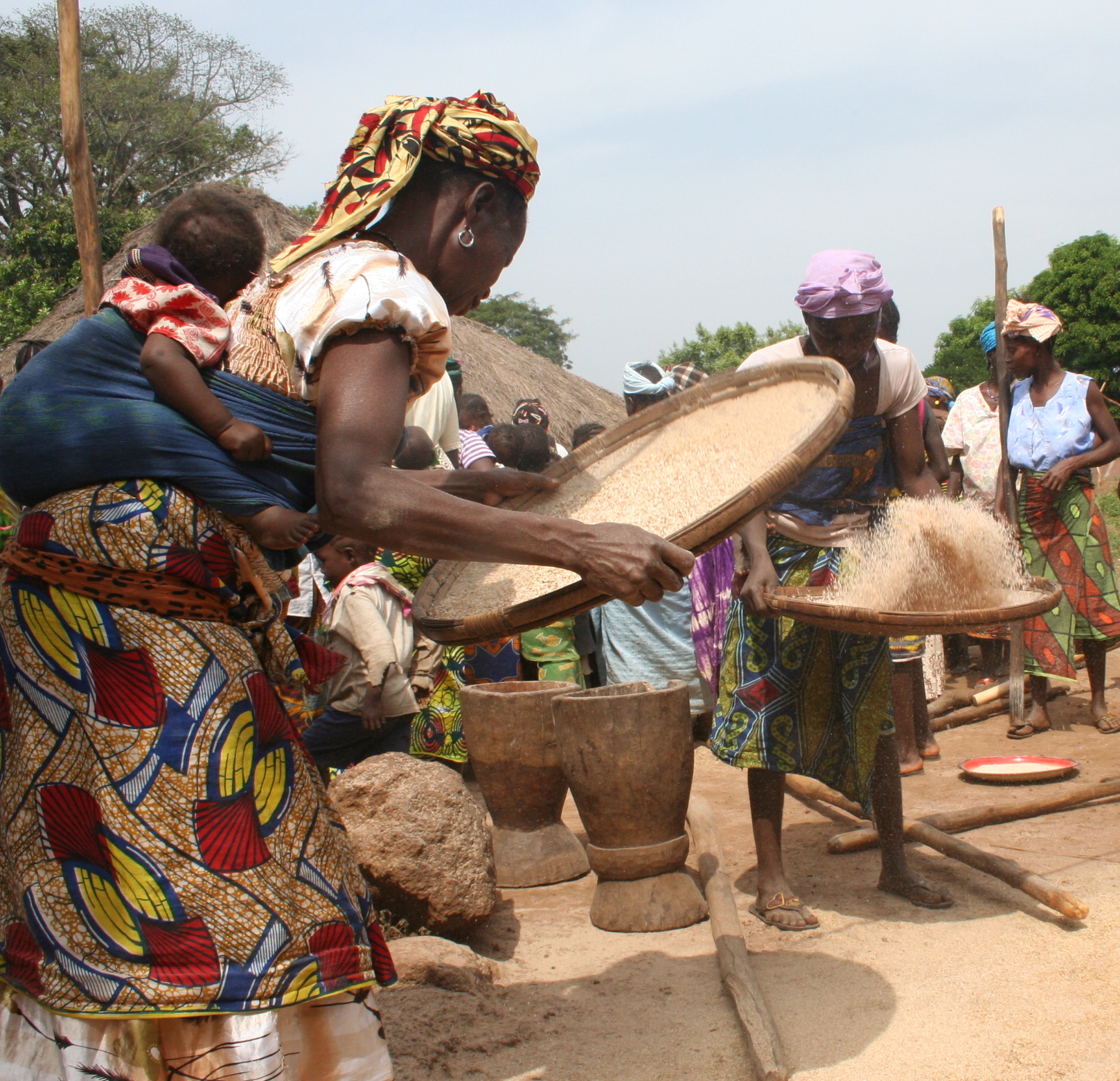
As we leave the car we see a crowd of women with long thick heavy rods pounding rice in wooden vessels shaped like tall jars. They are Peace Mothers from different villages all over the section. Every Tuesday they get together to pound and prepare 5 very large bags of rice they take to the market on Wednesdays to sell. The proceeds from this sale are used for education of all the children in the section.

Peace Mothers Pounding Rice
Here is yet another example of the empowerment of the women and the creativity caused by Fambul Tok’s healing process. The drums are beaten to make the work go faster and the to establish the rhythm for the pounding.
This district is known for its Secret Societies some of which still practice Voodoo or Black Magic. The reason our lead motorbike team stopped so suddenly was because when they heard the drums and saw the crowd of people, they thought a secret society ceremony was taking place. It is forbidden to witness these ceremonies unless you belong; thus the reluctance to immediately enter the village. I try my hand at pounding the rice. Soon I am in sync with the other woman at my jar and we are pounding the rice together in harmony. My stick is going up while hers is going down and vise verse. It is hard work but mesmerizing at the same time. There are two women at each jar and some jars have three. A few of the women are putting some lubricant on their hands to keep them from blistering.
Here, as at the rice farm, the nursing mothers are working with the babies tied to their backs. Some of the infants are fast asleep in spite of the rather violent shaking the activity causes. Others are tossing the pounded rice in the chafing baskets and still others are picking through the chafed rice to remove the small stones. Then the rice is put into the bags to take to market.

Chafing The Rice
We saw the Community Peace Farm just before entering the village. There is a sign stating it is a Community Peace Farm by Fambul Tok International. Fambul Tok doesn’t work the farm, the men and women from all the villages of the section do that, but they want to give Fambul Tok the credit for healing the communities and giving them the idea to establish this farm.
Even before the war the communities in a section never worked together. They never even visited each other’s villages and knew nothing about each other. Fambul Tok has healed the communities and taken them several steps farther by encouraging collective farming and empowerment of the women.
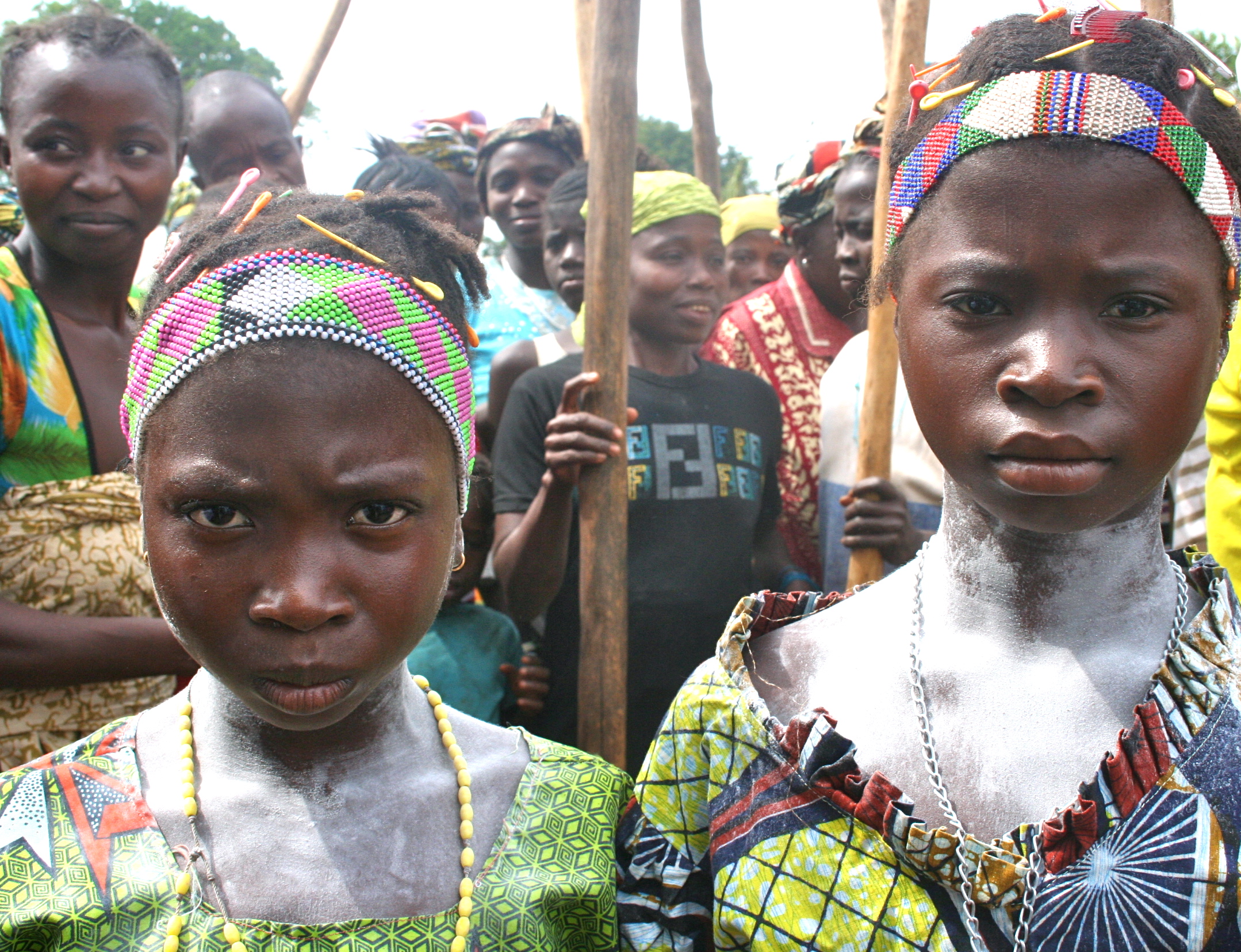
Suddenly two young girls appear their necks and chests covered with what looks like thick white flour. They have sashes around their waists with metal pieces dangling from them. They have anklets of jangling metal also. Unsmiling they perform a ritualistic dance. They are daughters of a secret society of women, and always perform on rice pounding day to the rhythm of the drums. As they are dancing one of the village men hands them coins. It is customary to give money for dancing.

Dancers
We are invited to gather around the Peace Tree and while the women continue to pound rice. The Chiefs and elders of the various communities who are gathered here today welcome us. The Kola Nut ceremony is performed and bananas and oranges brought for us to eat.
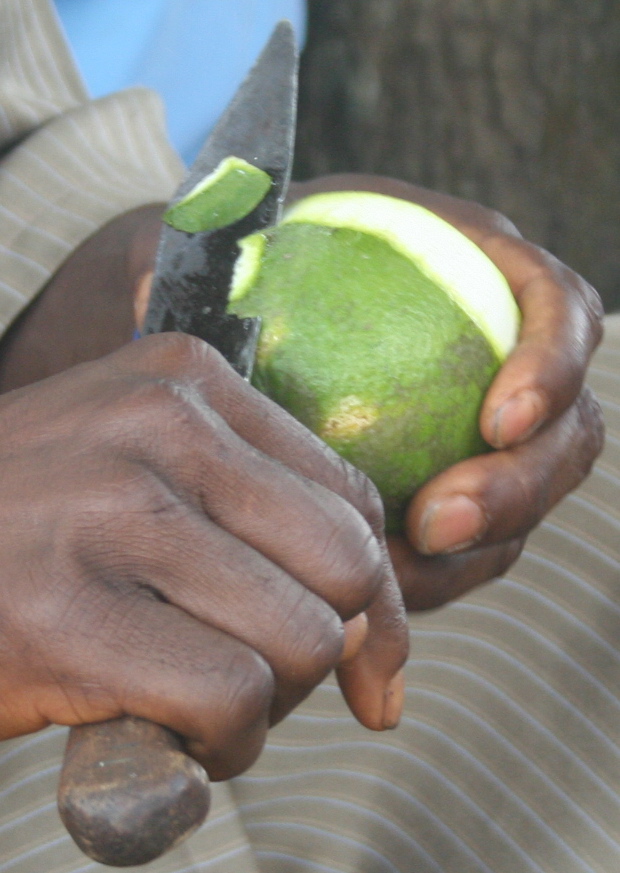
It is interesting how oranges are presented, sold and eaten here. First they are peeled leaving most of the zest in place. Then a thin slice is taken from one end. You place the open end of the orange in your mouth and while squeezing the orange you suck the juice out. You keep squeezing it like a tube of toothpaste until all the juice is gone and the orange looks like a deflated balloon.

Peeling The Orange
One of the Town Chiefs speaks to us explaining the peace, unity and ideas brought to them by Fambul Tok. The message is the same as the other villages. They LOVE Fambul Tok and the results reconciliation and the power of forgiveness bring. They want more ideas so they can get even more out of working together in peace and unity.
Some of the Peace Mothers take a break to speak to us about their successes. They also express a wish for more ideas to make them even more successful. They show us their storerooms telling us they could be so much more productive if they had proper storage.
As in the previous village, the rice and ground nuts must be sold soon after harvest or mice, rats and bugs ruin the harvested crop. Here the houses are very small and the storage space even more limited than the last village. Groundnuts and rice in very large bags are stored in the rafters above their beds.
As we begin to go to the car we are told they have lunch for us. Since it is an insult to refuse food, we sit down to eat. We learn that we are eating the lunch meant for the visiting chiefs! It is being served to us at the Section Chief’s insistence. We thank him profusely for his generosity.
Peace Mothers Journey: Villages Four and Five
Gbenekoro Village, Heremakono Section, Sengbeh Chiefdom
The fourth village we visit is located on the very top of the mountain so we slowly wend our way up the narrowing, very uneven dirt road full of holes and ruts. It is so remote it is amazing how the villagers found this site in the first place. Especially since they had to walk to reach it. The motorbike is a new addition to the transportation network arriving after the war only ten years ago.
This village is called the Rice Basket of Koinadugu because it can produce three harvests a year instead of the usual two. The Peace Mothers of this village realized that they were selling the rice to the traders at the lowest price when rice was plentiful thus making very little profit.

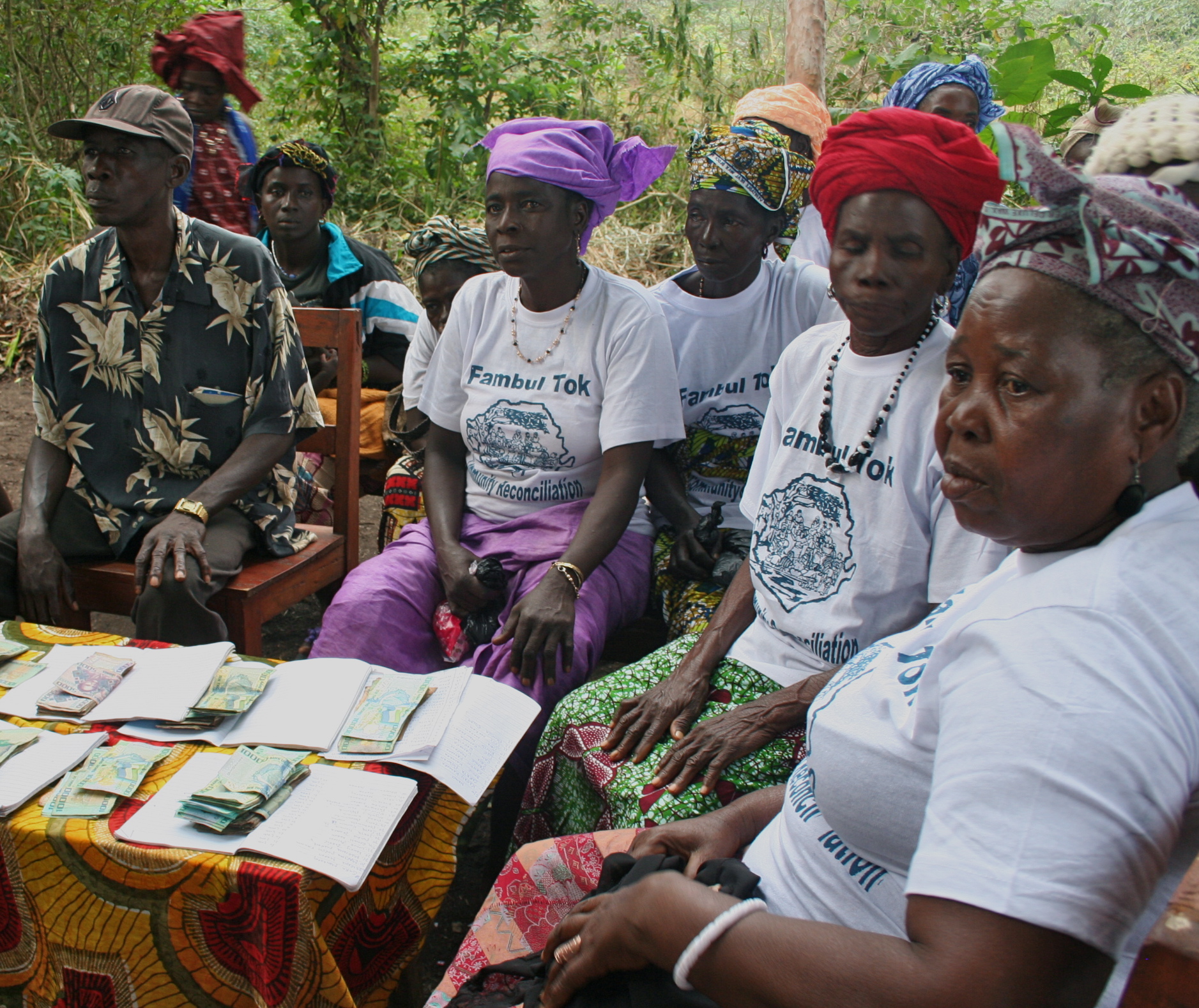
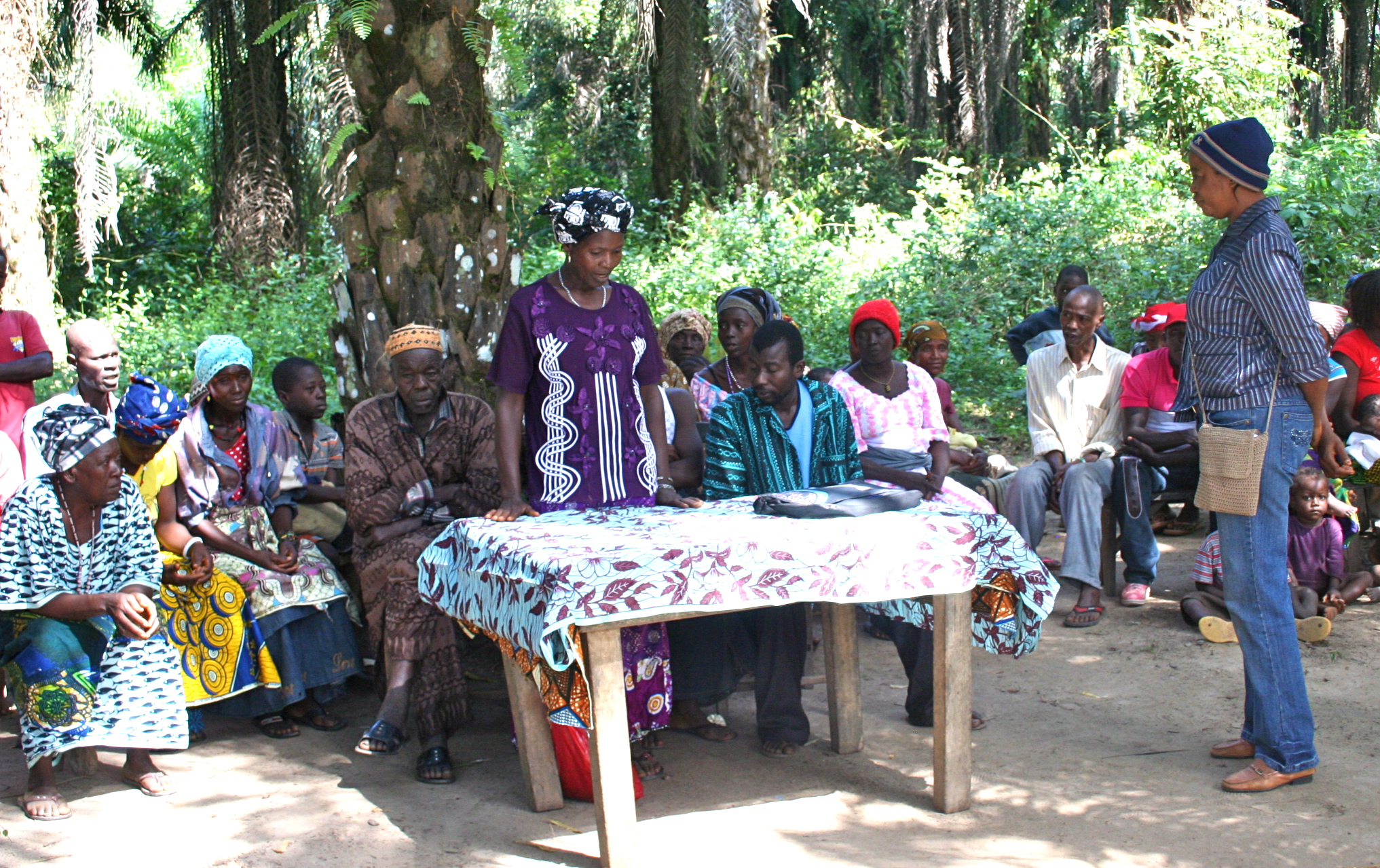
Monthly Meeting Of Peace Mothers Rice Buying
They created the idea to buy the all rice at the low trader price from the men’s harvest (men and women each farm their own fields), sell only what they need to from their harvest, store it and all the purchased rice from the men until the trader’s supply of rice is running low. Traders will buy their rice at a higher price during this time thus greatly increasing the income of the women.
They have built a small storage bin, but are fast outgrowing it. They need a larger bin to handle the increasing amount of the harvests. Storage bins are key to more produce and more profits. Such a seemingly simple item would greatly increase the quality of life for all.
The Town Chief speaks to us about his support of the women and what they do to improve the quality of life in the village. He believes behind every successful man is a strong woman. He is happy to have the women produce the money and take over the finances because when it is up to the men, they will only buy another wife! Now the money is used for education for the girl children as well as the boys.
As the villagers speak to us about the wonders of Fambul Tok and what the peace process has produced they also keep saying they didn’t expect us and haven’t had time to prepare a meal. In the end they give us gifts of a live rooster and hen and a large bowl of raw rice. We all place our hands on the fowl and acknowledge the rice. Micheala tells the Peace Mother Chair how grateful we are to receive these gifts and to save the chickens and rice to cook for the next visit from Fambul Tok.
Heremakono Village, Heremakono Section, Wara Wara Yagala Chiefdom
This is the last village to visit in Koinadugu. The women of all the villages in the section are in the middle of their monthly planning meeting. This month they are making the schedule for harvesting the Peace Mothers Rice Farm and cross-district fish trading. This section is the first to do cross-district trading. Fambul Tok gives them the seed money to get going. Once they have made back the amount of the loan, they will pass that money on to another section to begin their own cross district activities. Fambul Tok creates sustainability by giving the tools, ideas and encouragement to get the job started with no pay back to the Fambul Tok organization for this help.
If trading can be done on this level it will bring vegetables, ground nuts and local rice to those who have mostly fish and fish to those who have mostly rice, ground nuts, and vegetables.
As we watch the meeting the woman is chosen who will go to the fishing district to buy the fish. The actual trading is not in place yet but is the next step once transportation can be paid for out of their profits. At this time the Peace Mothers in the fishing section buy the fish from the fishermen, smoke the fish and sell it to their fellow Peace Mothers. The fish is then brought back and distributed to the villages in this section for them to sell.
They do not consume any of the fish, but if they wish they can buy it from themselves. This is a wonderful example of another way to encourage unity across Sierra Leone and provide more options for making money.
Soon the meeting is over and all gather under the Peace tree to greet us and give an activity update and testimony to Fambul Tok. First the Kola Nut ceremony and a tray of bananas appears as their gift.
The testimony here is the same as the other villages. They love Fambul Tok and bless the day they came to their section to intervene and bring them together in peace and reconciliation. They no longer spend money to go to the Chiefs or courts to settle their disputes and this allows them to put that money towards education.
Working together has opened the door to many money-making opportunities and they look forward to even more success in the future. The biggest need at the moment is storage! They are farmers of rice and groundnuts and need storage for the same reasons it is needed everywhere else in this district.

Clowns Dancing
At one point I asked Micheala if a large storage unit could be built in a central point in the sections so all the villages could use it and reduce the cost to each. The answer is no because of transportation difficulties.
If storage units are built in each village, the village could then produce more, sell more, and be able to build clinics, schools, stores, and to provide transportation and more.
Storage units would be built in a self help program where the zinc, cement and nails are provided while the village provides the wood, mud bricks and labor. The key for growth is storage. The cost for the basic supplies in a self-help program ranges from $3,000 to $5,000 depending on the size of the unit needed.
After the testimony, dancing begins in earnest and out come the clowns.
There is a man dressed in a Peace Mothers T-Shirt and a grass skirt. Two women are dressed as men. One has on a straw Panama-type hat with a shirt, vest and baggy pants. The other woman has on a Jalaba with a hat she has fashioned out of many objects.
Peace Mothers Journey: Villages Six and Seven
Masabong Village, Masabong Section, Paki Masabong Chiefdom, Bombali District
One Peace Mother in this section has created the best idea of all. It is working so well that Micheala has given this idea to other districts and sections. The Heremakono Section in the Sengbeh Chiefdom and the Heremakono Section in the Wara Wara Yagala Chiefdom in Koinadugu have recently started their own funds. One fund is already at 1,230,000 SLL.
It works like this: The first time the Peace Mothers from all the villages in this section got together the Peace Mother Chair presented the idea that each village contribute 50,000 SLL creating a fund totaling 700,000 SLL. This will become the seed money for a revolving loan system. They chose a couple of the villages to start and loaned them money to begin a business. At the next monthly meeting they brought back the original loan plus interest from their profits.

Peace Mothers Chairlady Explaining Loan Scheme
In addition various fines were established. There is a fine of 5,000 SLL for being late to the monthly meeting and for missing the meeting.
In addition, if it evident someone will miss the meeting they send a motorbike to get her and then she is liable for the 5,000 SLL fine AND the 20,000 SLL cost of the bike! Between the loan interest and the fines the original amount of 700,000 SLL has grown, in a little over a year, to 5,230,000 SLL!
Now each village has a cooperative business going. Some sell palm oil, some rice, some ground nuts, and one village has a variety of businesses. They sell at local markets or as human mini-markets along the road.

Telling Her Story
This large fund is available to anyone in the section who has a medical emergency and can’t pay or is short of money for school fees, etc. When it is determined they can pay it back, the money is given to them for their emergency along with a repayment schedule.
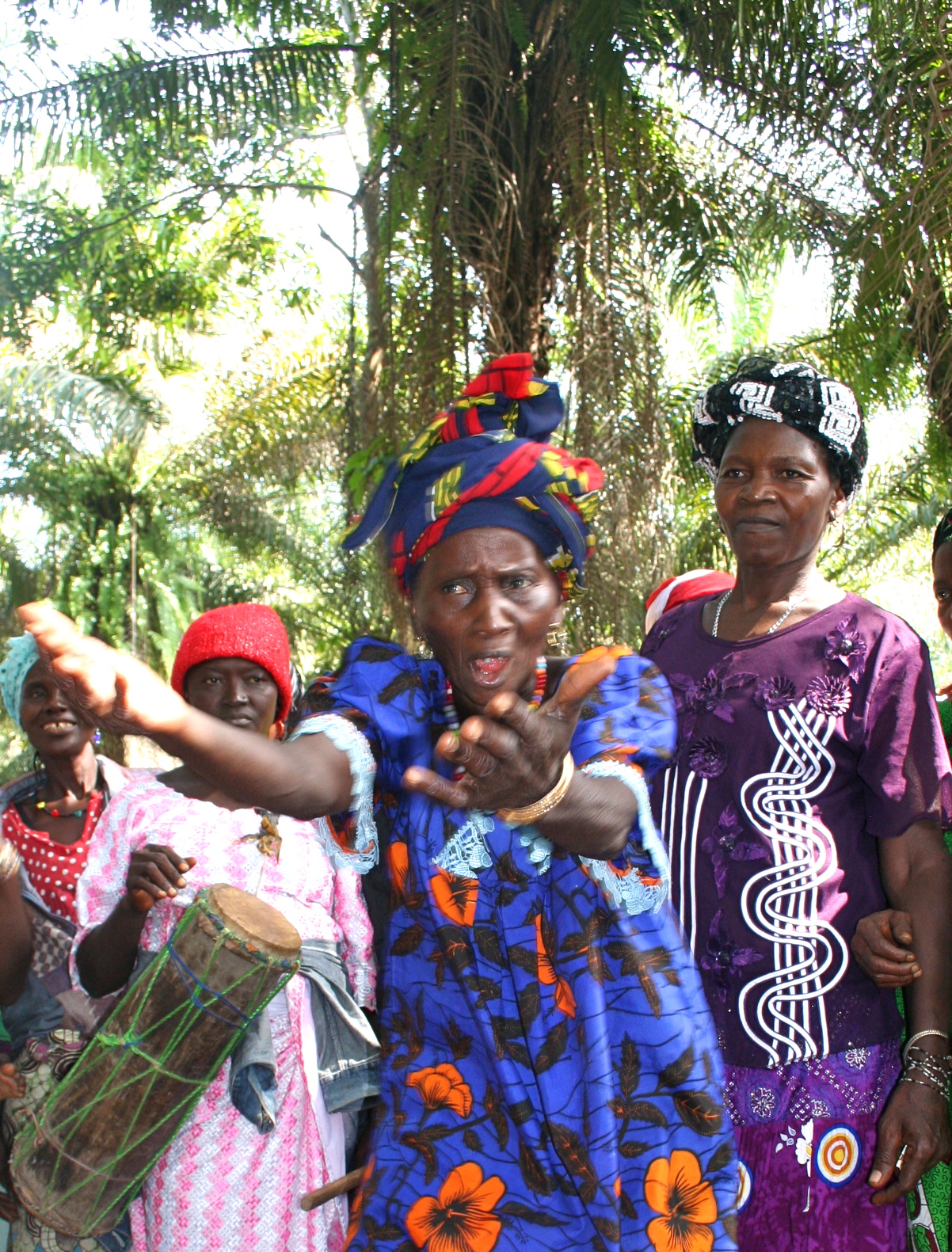
The treasurer of this fund is an older woman who is quite a lively character. She tells her story: During the war her husband is killed and she is raped. Even though the village does not shun her because of the rape, she is too ashamed to come out of her house or join in any of the village activities.
The Peace Mothers of her village decide to make her their project. They council her, encourage her and little by little she becomes part of the community once more. Now she dances and clowns around making us laugh and is a very valuable contributor to her village. This section decided to have a competition between the nursing mothers, the middle aged women and the elder women. They were each given a parcel of land to work growing either rice or groundnuts. The elders won!
But the harvest was so successful on all three parcels the town chief gave them two huge parcels of land to farm. He told us he will give them more land if they want it. Guess what they need to be able to accept the land and grow more products? Yes, Storage!
The testimony to Fambul Tok from the Town Chief is a familiar theme: thanks to Fambul Tok they are productive, peaceful and unified. They are working together, are proud of the women and love partnering with them. They are also saving money by no more having to pay fees to the courts for disputes.
Before the war, women everywhere were very marginalized. Beatings of women and children were a common occurrence. Since Fambul Tok the beatings have stopped and the women are empowered. The men and women are working together as partners in the home and on the farms.
We are fed a delicious lunch, given bananas and a joyful send off to singing and dancing.
Wareh Village, Masangbo Section, Makari Gbanti Chiefdom
The main road that leads to Freetown geographically divides this village. We cross the road and begin the long walk through the fields to the Peace Mothers Cassava Farm. They are waiting for us with the usual joyous dancing and singing. There is a very lively clown amongst the dancers.

Peace Mothers Chairlady
The Peace Mother Section Chair explains how they chose the land for the farm and then rented a tractor for ploughing. They faced and overcame the obstacle of the machine breaking down in the middle of the job and the owner of the machine pressing them to return it. As a result the field is not quite as large as planned, but they still have plenty of trees.
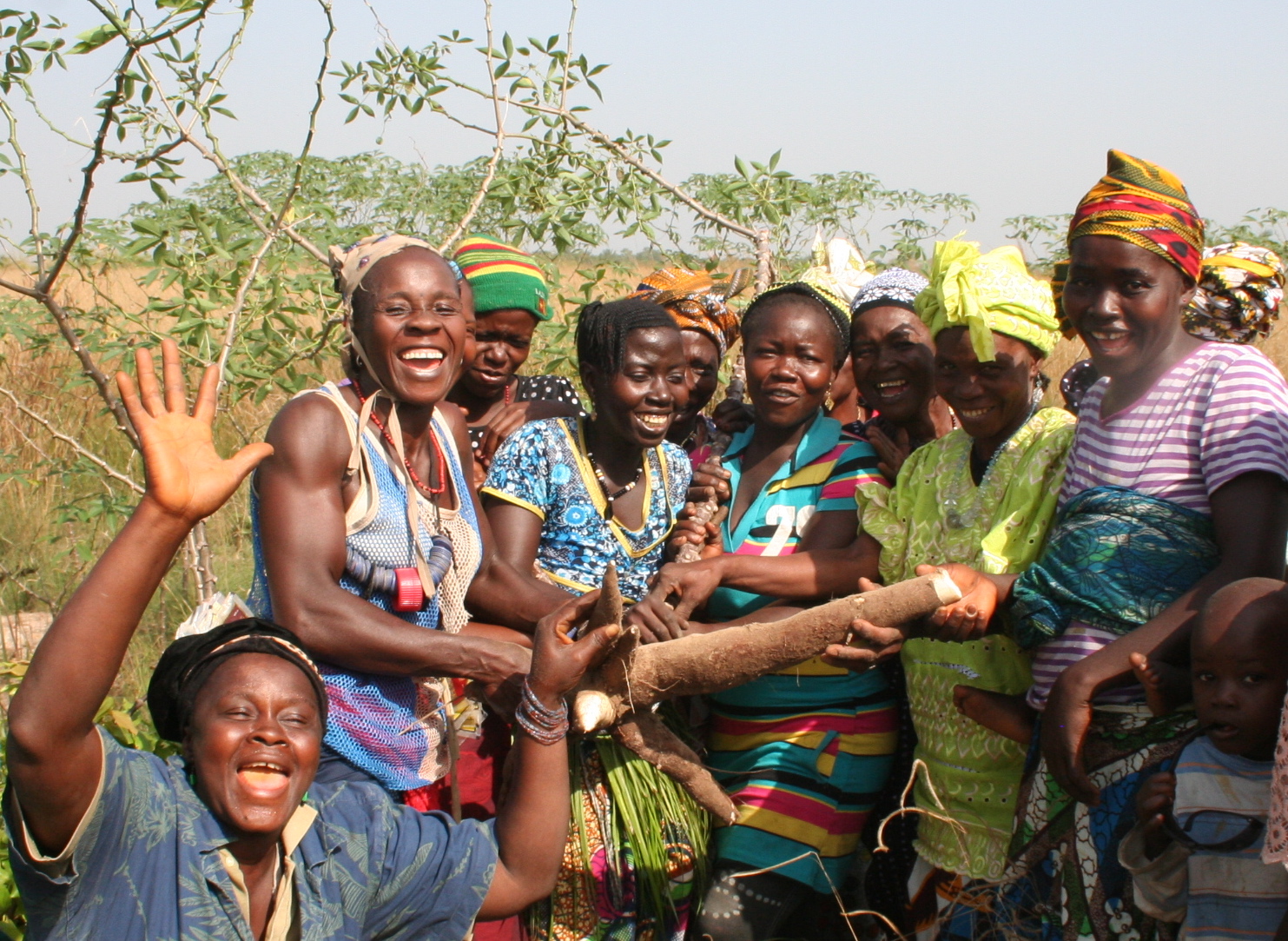
The cassava is the root of the tree. When it is time for harvest the entire tree is broken off and the root dug out. This, too, is back breaking, labor-intensive work. The clown helps to keep the people laughing and singing while they work. The whole tree is used. The leaves are consumed as a green in a sauce with rice or Fou Fou (fermented cassava). Cassava is also made into Goree, a tapioca like pudding with sugar added. Cassava can be peeled, boiled and formed into balls. The balls are then eaten with spicy beans. I have had Fou Fou and the balls, but not Goree yet. Cassava is a major staple and inexpensive.
The trunks (very thin with sections like a succulent) of the tree are called sticks. After harvesting the cassava root, the leaves are removed and the sticks are broken into shorter pieces, bundled up, placed in a cool spot like by a river and covered with straw. They stay this way until time for planting when the sticks are shoved into the ground, watered and tended until they make new trees.

Peace Mothers At Casava Farm
This village also smokes fish, but the cassava farm is a new venture and the result of the Fambul Tok process. This is their first harvest and they are very excited about how well the trees are doing. Not to belabor the point, but Fambul Tok is loved and revered here as well.
The need in this village is to have a cassava grater so they can preserve the root and not have to sell it all right away.
We are fed yet again and then make our way back to Freetown. I am feeling so blessed to have had all the variety of experiences these past few days. I can’t think of any way the journey could have been better or more complete. The culture is varied yet the same in the different districts and I have come to know and love it all.
Fambul Tok is an amazing miraculous program that is truly healing the country one community at a time through the power of forgiveness.
To quote Alan Paton: “There is a hard law. When an injury is done to us, we never recover until we forgive”